Eau de parfum vs eau de toilette vs parfum: what the names mean
Eau de toilette, eau de parfum, parfum, extrait: the words on a bottle tell you how much perfume oil is dissolved in it. More oil usually means a richer scent that stays on the skin for longer, and a higher price. It does not always mean the same smell, only stronger.
This guide explains what EDT and EDP mean, how eau de parfum, eau de toilette and parfum differ in everyday use, what words like "extrait", "intense" and "elixir" tell you, and what to check when you buy a bottle that isn't new.
1. What EDT, EDP and parfum mean
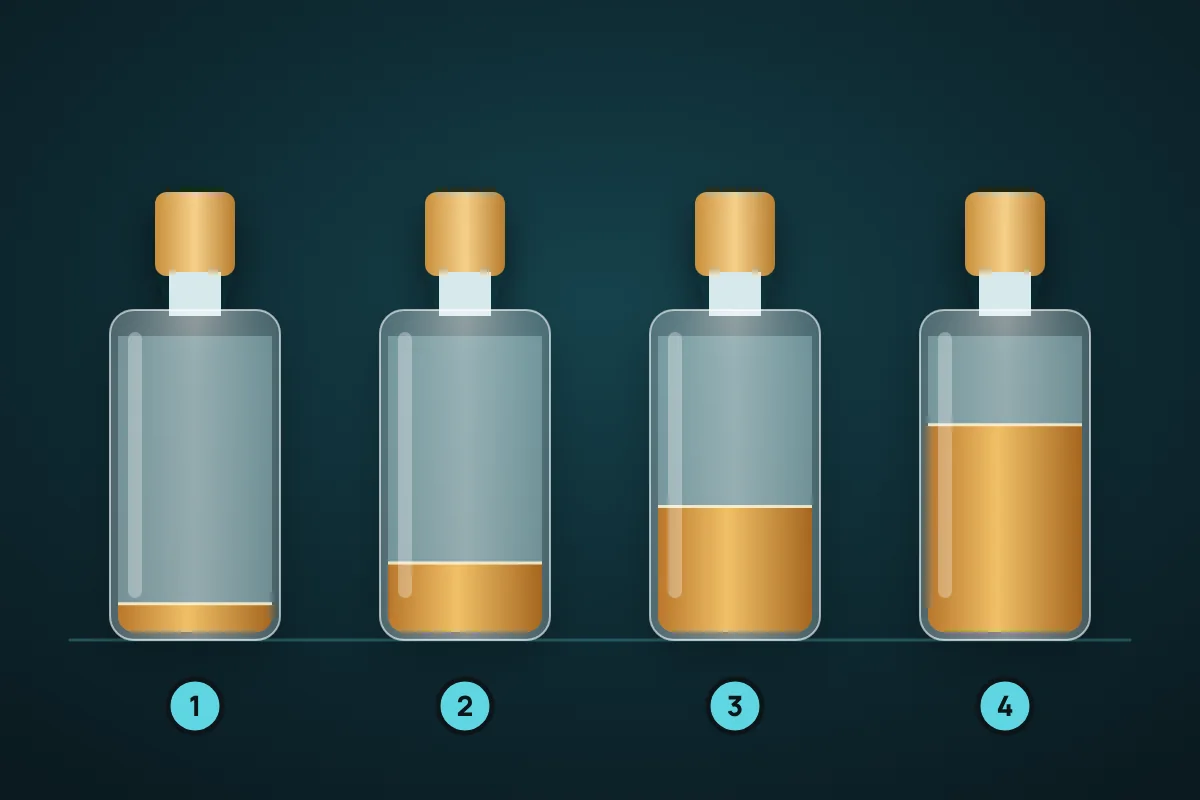
A spray perfume is a mix of perfume oil, alcohol and a little water. The perfume oil carries the scent. The names on the bottle describe how concentrated that oil is:
- EDT stands for eau de toilette, a lighter concentration.
- EDP stands for eau de parfum, a stronger one.
- Parfum, also called extrait de parfum or pure perfume, is the strongest.
- EDC stands for eau de cologne, the lightest of the classic four.
The words are French because the modern perfume trade grew up in France. You will find them on the front of the box, on the bottle and usually on the base label.
2. The concentrations from lightest to strongest
No fixed standard sets these numbers. Each house decides for itself, so the ranges overlap. As a rough guide:
- Eau fraîche and body mist: around 1 to 3 percent perfume oil. A short, light refresh.
- Eau de cologne (EDC): around 2 to 5 percent. Fresh and brief.
- Eau de toilette (EDT): around 5 to 15 percent. Bright in the opening, lighter on the skin.
- Eau de parfum (EDP): around 15 to 20 percent. Fuller, and it stays for longer.
- Parfum or extrait de parfum: around 20 to 40 percent. Dense, close to the skin, and the longest lasting.
Because the ranges overlap, one house's strong eau de toilette can hold more oil than another's light eau de parfum. Treat the name as a direction, not as a measurement.
3. Eau de parfum vs eau de toilette
These are the two concentrations most bottles come in, and the two that people compare most often.
- How long it lasts: an eau de toilette often fades after a few hours. An eau de parfum usually stays through most of a working day. Skin, weather and the scent itself change this more than the label does.
- How it opens: an eau de toilette tends to be brighter and fresher in the first minutes. An eau de parfum is rounder and shows more of its heart and base.
- How far it carries: stronger is not always louder. Some eau de toilettes fill a room for an hour, and some eau de parfums stay close to the skin all day.
- What it costs: for the same perfume and the same size, the eau de parfum usually costs more.
- When it fits: many people reach for an eau de toilette in the daytime and in heat, and for an eau de parfum in the evening or in cooler rooms. That is habit, not a rule.
Is eau de parfum better than eau de toilette? No. It is stronger, not better. The better one is the one you enjoy wearing where you wear it.
4. Parfum vs eau de parfum
Parfum, extrait de parfum and pure perfume are three names for the top concentration. Compared with an eau de parfum:
- It holds more perfume oil and less alcohol, so it feels denser and sometimes slightly oily on the skin.
- It usually lasts longest, but it often stays closer to the body. People near you smell it, the room does not.
- You need less of it. Many extraits come in smaller bottles, and some are dabbed on instead of sprayed.
- It costs the most per millilitre.
One trap in the wording: in everyday English, "perfume" means any fragrance. On a bottle, "parfum" means this one concentration. A listing that says "perfume" tells you nothing about strength; a bottle that says "parfum" does.
5. Intense, elixir, absolu: names without a fixed meaning
Many bottles carry a second word after the name: intense, elixir, absolu, extreme, le parfum, noir. These are names chosen by the house, not concentrations. Nothing defines how much oil an "elixir" must contain.
- Often they mark a deeper, sweeter or darker version of a perfume, with a formula of its own.
- Sometimes the concentration is higher than in the original, sometimes it is the same.
- The concentration is still printed on the box or the bottle, usually in small letters: eau de parfum, parfum and so on. That line is the one to read.
6. Same name, different smell
It is easy to assume that the eau de parfum of a perfume is the eau de toilette with more oil in it. Often it is not. Houses usually build each version as its own formula: the eau de toilette may lean fresher and more citrus, the eau de parfum warmer and sweeter, the parfum darker still.
So if you love one version, try the other before you buy it. And if someone recommends a perfume, ask which version they mean. A review of the eau de toilette can be a poor guide to the eau de parfum.
7. Which concentration for the UAE
- Heat speeds everything up. On warm skin, a perfume opens faster and fades sooner. Outdoors in summer, even a strong perfume has a shorter day.
- Strong perfume grows in heat. A dense eau de parfum or extrait can feel heavy in the midday sun and just right in an air-conditioned room or in the evening.
- Light perfume needs topping up. A fresh eau de toilette is pleasant in the heat, and a small decant in your bag lets you spray again later. See How to decant perfume.
- Perfume oil is its own tradition here. Attars and other oil-based perfumes contain no alcohol, are dabbed on, and sit close to the skin for a long time. They are not on the EDT to parfum scale at all.
However strong the perfume, storage decides how long the bottle itself stays good. How to store perfume in the UAE covers that.
8. What to check when you buy or sell
With pre-owned bottles, the concentration is one of the first things that goes missing from a listing, and one of the first that changes the price.
- If you buy: ask which concentration it is, and ask for a photo of the box front and of the base label. Compare prices only with the same concentration and the same size.
- If you sell: put the concentration in the title, next to the size in millilitres. Selling used perfume in the UAE shows what else belongs in a listing.
- Decants and samples: the label is written by whoever filled the vial, so ask which version of the perfume it came from. More in Perfume decants: what they are and how to buy them.
- Testers: a tester is the same perfume in the same concentration as the retail bottle. The word "tester" says nothing about strength. See Tester perfumes.
- A warning sign: a bottle labelled with a concentration the house has never sold for that perfume deserves a second look. How to tell if a perfume is original shows what else to compare.
In PERFUMI's Souk you can buy, sell, trade or request bottles, samples and decants. Every listing shows a trust level built from real evidence, such as a confirmed phone number or buyer reviews. Trust levels help you decide; they are not a guarantee.
Frequently asked questions
What does EDP mean?
EDP stands for eau de parfum. It is a concentration with roughly 15 to 20 percent perfume oil: stronger than an eau de toilette and lighter than a parfum.
What does EDT mean?
EDT stands for eau de toilette. It holds roughly 5 to 15 percent perfume oil, which makes it lighter and usually shorter lived than an eau de parfum.
Which lasts longer, eau de parfum or eau de toilette?
Usually the eau de parfum, because it holds more perfume oil. The scent itself matters as well: a woody eau de toilette can outlast a citrus eau de parfum.
Is parfum the same as eau de parfum?
No. Parfum, also called extrait de parfum, is the concentration above eau de parfum. It holds more perfume oil, lasts longer and usually stays closer to the skin.
What is extrait de parfum?
It is the strongest common concentration, with roughly 20 to 40 percent perfume oil. Parfum and pure perfume mean the same thing.
What is the difference between perfume and cologne?
Strictly, eau de cologne is the lightest classic concentration, and anyone can wear it. In everyday speech, mostly in North America, "cologne" is also used for any fragrance sold to men, whatever its strength. The label on the bottle tells you which is meant.
Does a stronger concentration smell the same, only stronger?
Often not. Many houses give each concentration its own formula, so the eau de toilette and the eau de parfum of one perfume can smell clearly different. Try the version you plan to buy.
More guides: What is niche perfume?, Perfume dupes and similar scents and How to buy used perfume safely.
Get PERFUMI
PERFUMI is now on Google Play in the UAE. The iPhone app is coming soon: leave your email and we'll tell you the moment it's on the App Store.