
Perfume dupes and similar scents: what they mean and how to find one
A dupe is a perfume made to smell like another, better-known one, and sold under its own name for less. The word is everywhere, and it gets mixed up with two very different things: perfumes that simply smell similar, and fakes.
This guide explains what dupe, clone and inspired-by mean, where a dupe ends and a fake begins, and how to find a perfume similar to one you love by its notes.
1. What a perfume dupe is
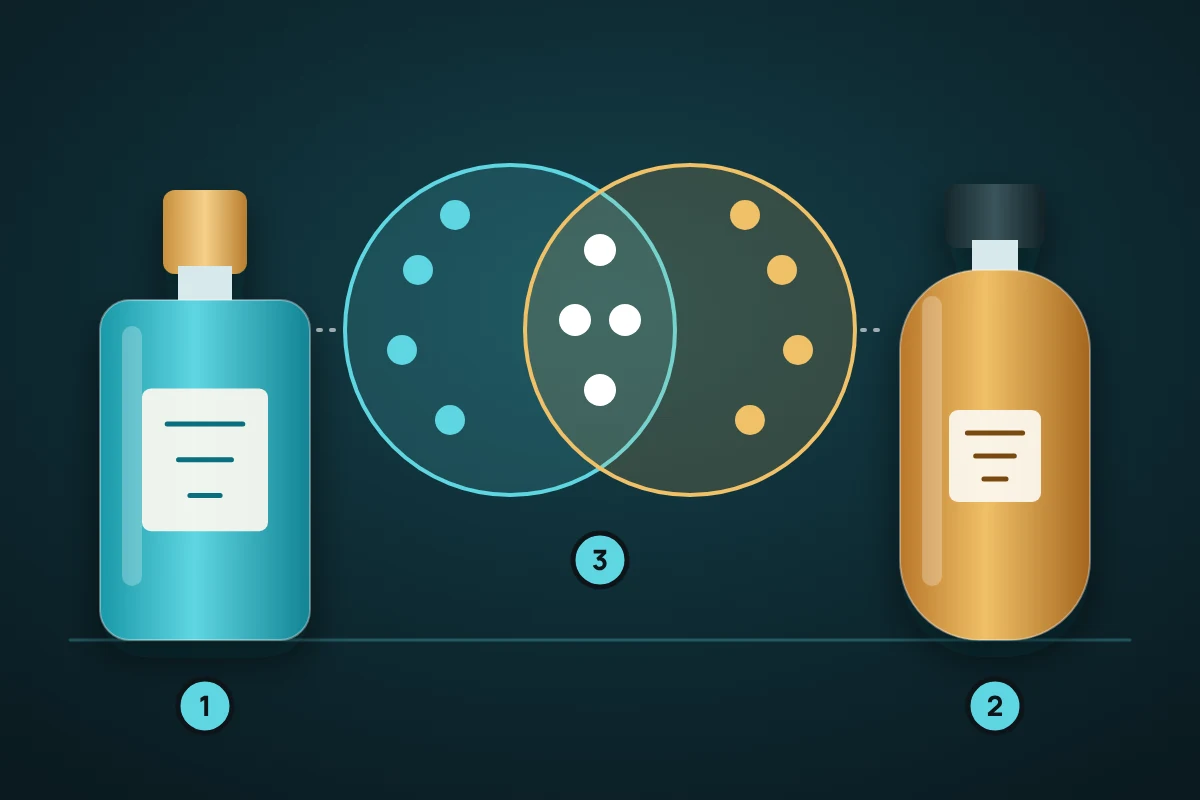
"Dupe" is short for duplicate. In perfume it means a scent that was made on purpose to smell like one specific, well-known perfume, and that is sold under its own name and brand, usually for much less.
People look for dupes for three reasons: the original costs more than they want to spend, the original has been discontinued or changed, or they want the same style for every day and keep the original for occasions.
A dupe is not a second bottle of the same perfume. It is a different perfume, by a different maker, that aims at the same smell. How close it comes ranges from very close to barely related.
2. Dupe, clone, inspired-by, similar: what the words mean
- Dupe, clone, "inspired by", alternative: four words for the same thing. "Clone" is the older word among collectors, "dupe" came from social media, and "inspired by" is what sellers write.
- Similar, "smells like": two perfumes that were each made on their own and share a style. This is common: successful perfumes start trends, and whole families of perfumes follow them.
- Flanker: a new version of an existing perfume from the same house, such as an intense or a summer edition. Related, but not the same scent.
- "Type" or "impression" oils: perfume oils sold as "our impression of" a known perfume. The same idea in oil form.
- Fake, counterfeit, "first copy", "master copy": a product that uses the original's name, bottle and box and is sold as the original.
3. Is a dupe a fake?
No. The difference lies in what the buyer is told.
- A dupe is sold under its own name and brand, in its own bottle. You know that you are buying a different perfume.
- A fake copies the name, the bottle and the box, and is sold as that perfume.
So "the same perfume, only cheaper", offered in the original's bottle, is not a dupe. And a dupe that is poured into an original bottle, or sold as a decant of the original, is no longer a dupe: it is being sold as something it is not.
If it is the original you want, check the bottle. How to tell if a perfume is original shows how.
4. Why two perfumes smell alike: notes, accords and families
Perfume is described in three layers:
- Notes: the single smells you can pick out, such as bergamot, rose, vanilla or oud. Top notes are what you smell in the first minutes, heart notes carry the middle hours, and base notes stay on skin and clothes to the end.
- Accords: several notes blended into one impression, such as "amber", "leather" or "fresh laundry".
- Families: the broad style: citrus, floral, woody, amber, aromatic, gourmand (sweet, edible notes), leather and others.
Two perfumes smell alike when they share the main accord and most of the heart and base. A shared top note alone means little: it is gone after a few minutes.
A note list is the house's description of what you will smell, not a recipe. Two perfumes with nearly the same list can smell different, and two with different lists can smell close. Use notes to build a shortlist, and your nose to decide.
How notes work, and what top, heart and base notes are, is explained in Perfume notes explained.
5. How to find a perfume similar to one you love
- Pin down what you like. Is it the opening, the scent after three hours, a single note such as vanilla or oud, or the mood: fresh, warm, sweet, clean?
- Look up the notes and the family on the house's own page or in a perfume database.
- Search by heart and base notes, not by the top. What you remember from wearing a perfume is mostly its heart and base.
- Look close to home first. Other versions of the same perfume, other perfumes from the same house and work by the same perfumer often share a style.
- Read what wearers say. Reviews and perfume groups often compare perfumes directly. Read several opinions: similarity is a matter of nose, and people disagree.
- Shortlist three and test them on skin, next to the perfume you know if you still have it: one on each wrist, and again after a few hours.
In PERFUMI, Discover lets you look up any perfume by name or by note.
6. What a dupe or a similar scent can't copy
- The whole journey: a perfume may match the opening and then go its own way, or only meet the original in the base.
- Lasting power and trail: how long a scent stays and how far it carries differ from perfume to perfume, in both directions.
- Smoothness: a close match on paper can still smell sharper, flatter or sweeter on skin.
- Your skin: the same perfume smells a little different on different people, so someone else's "identical" may not be yours.
- Numbers: "95% similar" is an opinion. Nobody measures it.
Go in expecting a relative, not a twin. Many people end up liking the similar perfume for what it is.
7. Test before you buy: samples and decants
Paper strips show the first minutes. Skin shows the rest. Wear a candidate for a full day before you buy a bottle, and compare it with the perfume you know at the same time if you can.
- Samples and discovery sets from the house are the simplest way.
- Decants let you test perfumes that have no official sample, including older and discontinued ones. See Perfume decants: what they are and how to buy them.
- Test one or two at a time. After the third perfume, the nose stops telling them apart.
Looking for a replacement because your perfume is no longer made? Search for the original bottle first: how to find a discontinued perfume.
8. Selling or swapping: call it what it is
- List every perfume under its own name and brand.
- Don't put the name of the original in the title of a dupe as if it were that perfume. "Similar to" belongs in the description, clearly worded.
- An "inspired by" or "clone" perfume is not a decant of the original, and the label should not suggest that it is.
In PERFUMI's Souk you can buy, sell, trade or request bottles, samples and decants. Every listing shows a trust level built from real evidence, such as a confirmed phone number or buyer reviews. Trust levels help you decide; they are not a guarantee.
Frequently asked questions
What does dupe mean in perfume?
A perfume made to smell like a specific, well-known perfume and sold under its own name and brand, usually for less. It is also called a clone, an alternative or an "inspired by" perfume.
Is a dupe perfume fake?
No. A dupe has its own name, brand and bottle, so you know you are buying a different perfume. A fake copies the original's name, bottle and box and is sold as the original.
Dupe vs clone: is there a difference?
No. Both words describe a perfume made to smell like another one. "Clone" is the older word among collectors, and "dupe" is the one social media made popular.
Are dupe perfumes good?
Some come very close to the original and are well made. Others miss it, or fade quickly. Neither the price nor other people's reviews replace a test on your own skin.
Do dupes last as long as the original?
It varies. Some last well, others fade sooner or smell different after a few hours. Only wearing one for a day tells you.
How do I find a perfume similar to my favourite?
Look up its notes and family, search for perfumes that share its heart and base notes, read what wearers say, and test a shortlist of three on skin. Start with other versions from the same house.
Can I search for a perfume by its notes?
Yes. Perfume databases and apps let you filter by note. In PERFUMI's Discover you can look up any perfume by name or by note.
More guides: Tester perfumes: what they are, and whether they are original, How to buy used perfume safely and Does perfume expire?
Get PERFUMI
PERFUMI is now on Google Play in the UAE. The iPhone app is coming soon: leave your email and we'll tell you the moment it's on the App Store.