Oud, bakhoor and attar: Arabic perfume explained
Oud, bakhoor, attar, musk: you meet these four words in every perfume shop in the UAE, and they are easy to mix up. Oud is a wood, and the oil made from it. Bakhoor is what you burn. Attar is perfume carried in oil instead of alcohol.
This guide explains each of them, how they are worn together, what "oud" means on a spray perfume, and what to check when you buy.
1. What oud is
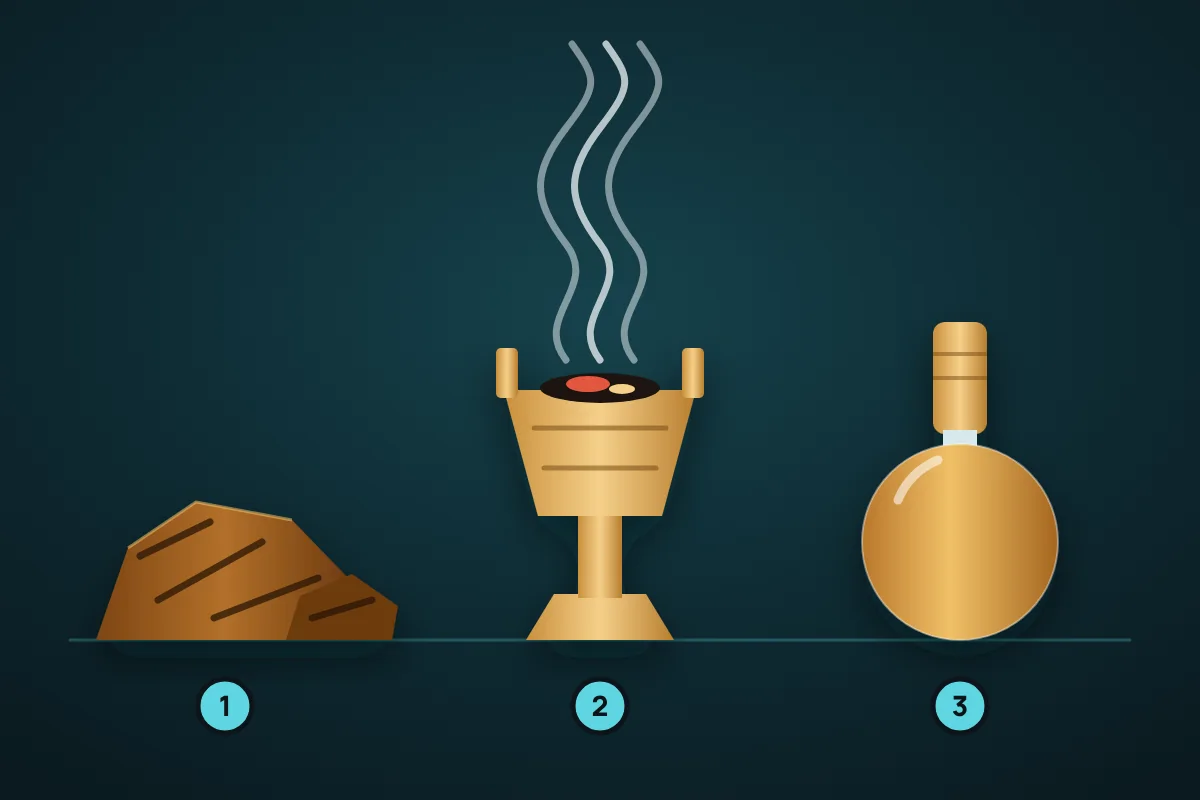
Oud, also called agarwood, comes from a tree that grows in South and Southeast Asia. Healthy wood from this tree is pale and has almost no smell. When the tree is wounded and a mould settles in, it defends itself with a dark, fragrant resin. The wood soaked with that resin is oud.
Only some trees form the resin, and it takes years. That is why oud is rare, and why it is one of the most expensive raw materials in perfumery.
The smell is hard to mistake once you know it: deep, warm and woody, often with a leathery or animal edge, sometimes sweet, sometimes smoky. It changes with the region the wood comes from and with its age.
2. Oud chips, oud oil and "oud" in a spray perfume
- Oud chips: small pieces of the wood itself, burned on charcoal for their smoke. In the Gulf this is the classic welcome for guests.
- Oud oil: known as dehn al oud, distilled from the wood. A thick, dark oil that is dabbed on in tiny amounts and stays on skin and clothes for a very long time.
- Oud in a spray perfume: a perfume built around an oud note. In most spray perfumes that note is recreated from other materials, because natural oud oil is scarce and costly. It can smell excellent. It is a different thing from the natural oil.
The word "oud" on a label can mean very different things: natural oil, a blend, or a recreated note. Ask which one you are buying.
3. What bakhoor is
Bakhoor is incense for the home, for clothes and for hair. Most bakhoor is made of wood chips soaked in perfume oils and mixed with resins and other fragrant materials such as musk, amber, sandalwood or rose. It is sold as loose chips, as pressed tablets or as a soft blend in a jar.
So oud and bakhoor are not the same:
- Oud chips are the plain wood, burned for its own smell.
- Bakhoor is a prepared blend. It may contain oud, and often it contains other woods that carry the perfume.
Bakhoor is burned when guests arrive, after cooking, before going out, and on Fridays and festive days. People pass their clothes and hair through the smoke, and the scent stays in the fabric for hours.
4. How to use a bakhoor burner
The burner is called a mabkhara. There are two kinds:
- A charcoal burner: light a charcoal disc and wait until it is covered in grey ash. Then lay a small piece of bakhoor on it. A piece the size of a fingernail is enough for a room.
- An electric burner: a heated plate takes the place of the charcoal. It gives less smoke and a softer scent, and it is easier to control.
A few habits make it work better:
- Start with a small piece. Too much bakhoor on hot charcoal burns instead of releasing its scent.
- Stand the burner on a heatproof surface, away from curtains and fabric, and don't leave burning charcoal unattended.
- To scent clothes, hold them above the smoke for a short while, not directly over the charcoal.
- Keep bakhoor in a closed jar, in a cool, dry place. It loses its scent in open air.
5. What attar and perfume oil are
In Arabic, "attar" or "itr" simply means perfume. In English, the word is used for the traditional perfume oils of the Middle East and South Asia: fragrance carried in oil, with no alcohol.
- How it is applied: dabbed on with a small stick or a roller, usually on the wrists, behind the ears and on the beard or clothes.
- How it behaves: it stays close to the skin and lasts long. It does not fill a room the way a spray can.
- How it is sold: in small bottles, often by the tola, a traditional unit of about 12 millilitres. Quarter and half tolas are common.
- Mukhallat: the Arabic word for a blend. A mukhallat mixes several oils, typically oud, rose, musk, amber and saffron.
Perfume oils are not part of the scale from eau de toilette to parfum. That scale describes sprays based on alcohol: see Eau de parfum vs eau de toilette.
6. Musk, amber, rose and saffron
- Musk: soft, clean and skin-like. It once came from an animal. Today the musk in perfume is almost always made in a laboratory, and "white musk" is the fresh, soapy style of it.
- Amber: in perfume, amber is not the fossil stone. It is a warm, sweet blend of resins and vanilla.
- Rose: the rose of Taif is the best-known one in the region, bright and rich, and a classic partner for oud.
- Saffron: dry, leathery and a little bitter. It gives many Arabic perfumes their golden, spicy opening.
7. How they are worn together
Arabic perfume is usually worn in layers, and each layer does a different job:
- Bakhoor first, on clothes and hair. It gives a soft cloud that follows you.
- Oil next, on the skin. It is the long-lasting heart of the scent.
- A spray last, if you like. It adds the bright opening that oil and smoke don't have.
There is no fixed recipe. Start with one oil and one spray that share a note, such as rose or musk, and build from there. More on making a scent stay in How to make perfume last longer.
8. What to check when you buy
- Ask what it is: natural oud oil, a mukhallat, or a recreated oud note. All three are sold as "oud", at very different prices.
- Try it on skin: oils open slowly. Dab a little on, wait half an hour, and decide then.
- Start small: a quarter tola of an oil or a small jar of bakhoor tells you enough before you buy more.
- Don't rely on a story: origin, age and grade are hard to prove for a buyer. Let your nose and the seller's openness decide, not a certificate you can't verify.
- If you buy pre-owned: ask how much is left in the bottle, how it was stored, and whether it is the original bottle or a refill. How to buy used perfume safely lists the questions to ask.
- For spray perfumes with oud: the usual checks apply. See How to tell if a perfume is original.
In PERFUMI's Souk you can buy, sell, trade or request bottles, samples and decants. Every listing shows a trust level built from real evidence, such as a confirmed phone number or buyer reviews. Trust levels help you decide; they are not a guarantee.
Frequently asked questions
What does oud smell like?
Deep, warm and woody, often with a leathery or animal edge, and sometimes sweet or smoky. Natural oud differs a lot from one region and one age to the next.
Is oud the same as bakhoor?
No. Oud is the wood itself, and the oil distilled from it. Bakhoor is a prepared incense: wood chips soaked in perfume oils and mixed with other fragrant materials. Bakhoor may contain oud, but it doesn't have to.
What is the difference between attar and perfume?
An attar is a perfume carried in oil, with no alcohol, and it is dabbed on. A spray perfume is carried in alcohol. The oil stays closer to the skin and usually lasts longer. The spray carries further.
Why is oud so expensive?
Only some trees form the fragrant resin, it takes years, and a large amount of wood gives a small amount of oil. Natural oud oil is scarce, so its price is high.
Does an oud perfume contain real oud?
Some do. Most spray perfumes use an oud note recreated from other materials. If natural oud matters to you, ask the seller directly.
What is a mukhallat?
Mukhallat is the Arabic word for a blend. In perfume it means an oil that mixes several materials, typically oud, rose, musk, amber and saffron.
How long does the scent of bakhoor last?
In a room, a few hours. On clothes it can stay for a day or longer. How long exactly depends on the bakhoor and on the fabric.
More guides: Eau de parfum vs eau de toilette, What is niche perfume? and Where to buy original perfume in Dubai and the UAE.
Get PERFUMI
PERFUMI is now on Google Play in the UAE. The iPhone app is coming soon: leave your email and we'll tell you the moment it's on the App Store.